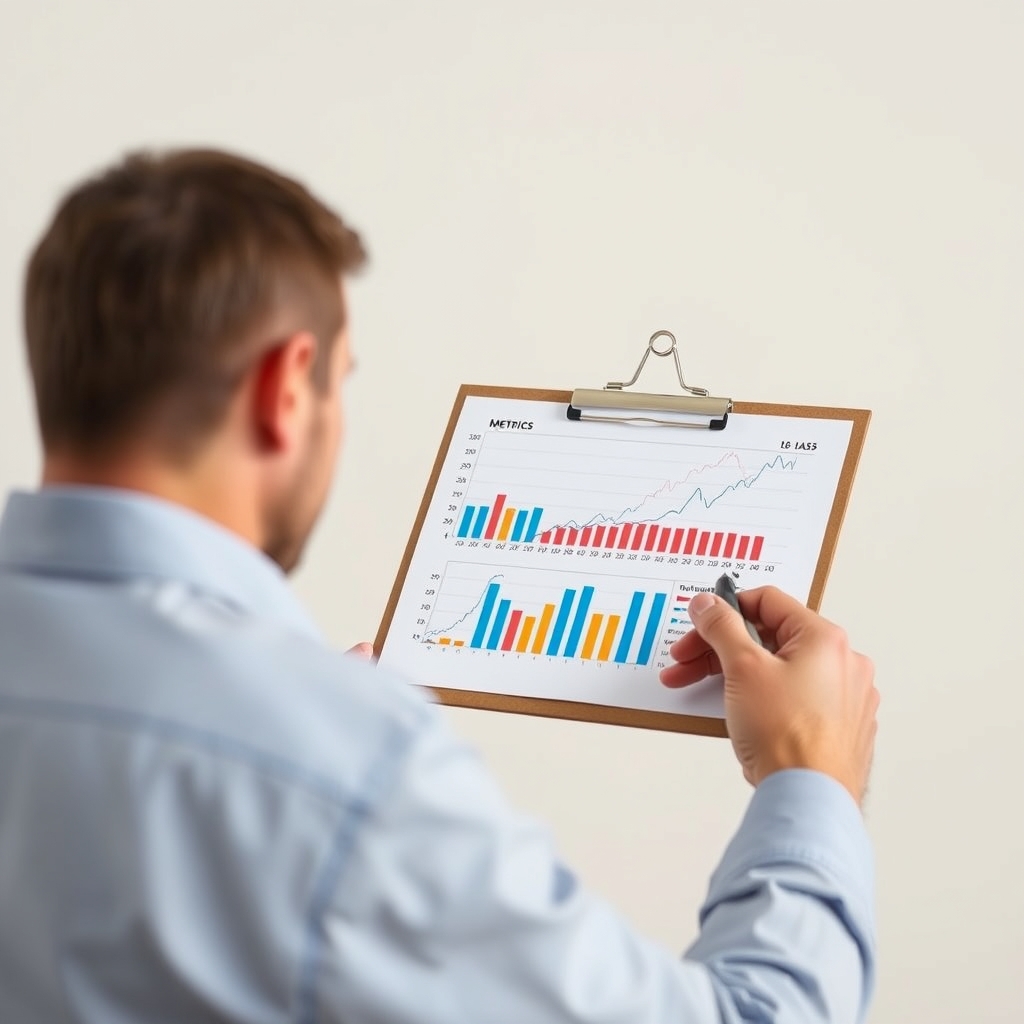
Most small business owners look at too many numbers or too few. This guide covers the handful of funnel metrics worth your attention, how to calculate them, and how to track each stage without building a data science project. For the bigger picture, start with Funnel Marketing Basics.
The Short Version
- Track one conversion rate per stage, not one overall number.
- Know your customer acquisition cost (CAC) and compare it to what a customer is actually worth.
- Fix the biggest drop-off first. Small gains at the leakiest stage beat polishing the strongest one.
- Do not trust conclusions from tiny samples.
The Core Metrics
Conversion rate (per stage)
Formula: people who completed the step ÷ people who reached the step × 100.
Example: 200 visitors reach your opt-in page and 50 sign up. That is a 25% opt-in rate. Those numbers are for illustration only, not a benchmark. "Good" varies widely by traffic source, offer and price, so compare against your own past results first.
Cost per lead (CPL)
Ad spend ÷ leads generated. Useful early, but a cheap lead who never buys is not a bargain.
Customer acquisition cost (CAC)
Total sales and marketing cost ÷ new customers in the same period. Include ad spend, and be honest about other costs too: tools, freelancers, creative, and your own time if you want a realistic view. Many owners leave these out and feel better than they should.
Average order value (AOV) and customer lifetime value (LTV)
AOV is revenue ÷ orders. LTV is roughly what an average customer pays you over their relationship with you, ideally measured on gross profit rather than revenue. If you have little repeat-purchase history, treat any LTV figure as a rough guess.
Payback period
How long it takes a customer's gross profit to cover their CAC. For a cash-strapped business this often matters more than LTV, because you have to fund the gap.
Metrics by Funnel Stage
| Stage | What to measure | What a weak number often suggests |
|---|---|---|
| Ad / traffic | Click-through rate, cost per click, cost per landing page view | Weak creative, wrong audience, or a mismatch between ad and offer |
| Landing / opt-in | Opt-in rate | Unclear promise, slow page, too many form fields |
| Nurture (email) | Open rate, click rate, replies | Poor subject lines, irrelevant content, deliverability issues |
| Offer / checkout | Sales page to checkout rate, checkout completion, cart abandonment | Price friction, trust gaps, surprise costs |
| Post-purchase | Repeat purchase rate, refund rate, upsell take rate | Product fit, expectation gaps |
Note that email open rates have become less reliable because of privacy features on some email apps, so lean on clicks, replies and sales instead.
How to Set Up Tracking
- Map your stages. Write down every page and step from first click to purchase. If you are unsure which structure fits, see Which Funnel Type Fits Your Business?
- Give each source a label. Use consistent UTM parameters on ad links so you can tell where leads and sales came from.
- Install your ad pixel. Without it, ad platforms cannot report conversions or optimize. Here is how to install the Facebook Pixel on your funnel.
- Define conversion events. At minimum: lead, checkout started, purchase.
- Put numbers in one sheet. A simple weekly spreadsheet with visitors, leads, sales, spend and CAC is enough to start.
- Test the setup. Do a test opt-in and purchase yourself and confirm each event appears where you expect.
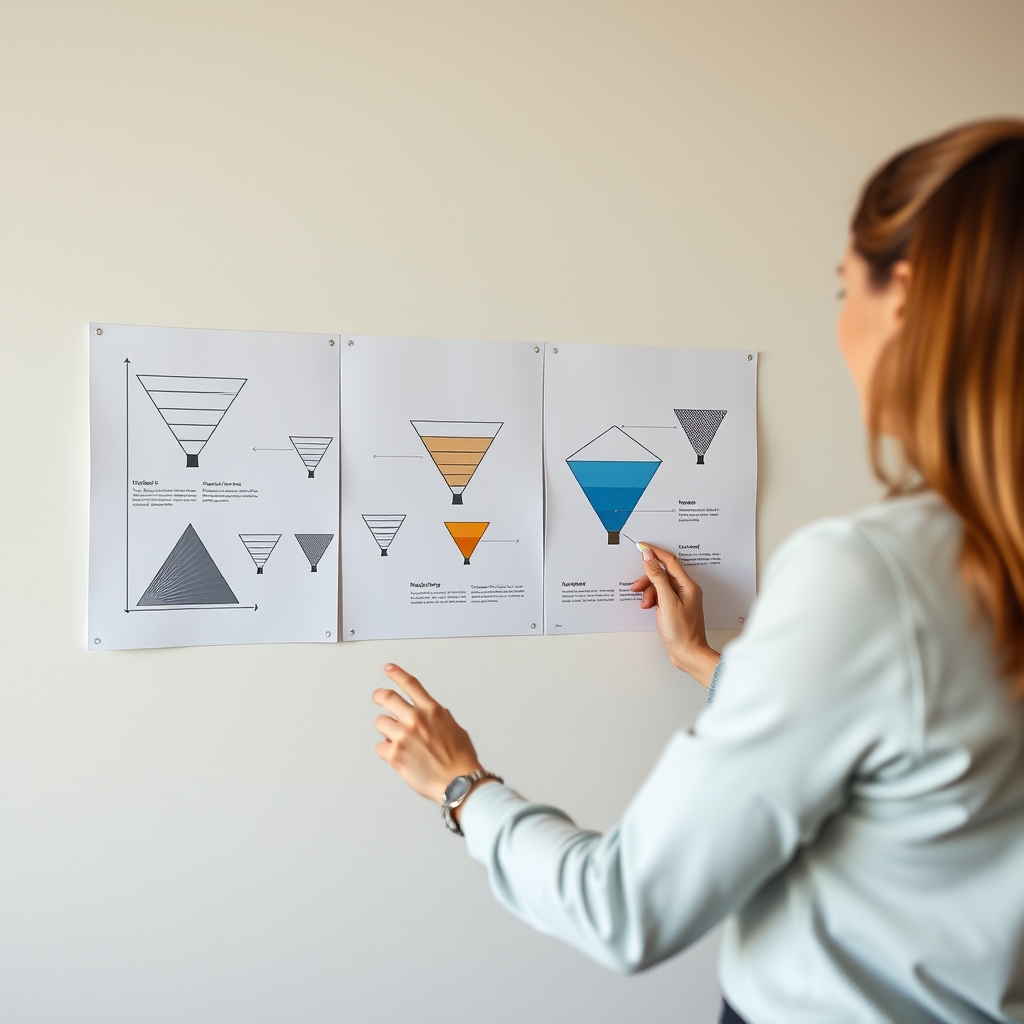 Recommended for youWhich Funnel Type Fits Your Business? Lead Gen, Tripwire, Webinar, Application and Ecommerce Funnels Compared
Honest Tradeoffs and Pitfalls
- Platform numbers disagree. Your ad manager, funnel builder and payment processor will rarely match exactly, because of attribution windows, browser privacy settings and blocked tracking. Treat ad platform data as directional and your payment records as the truth for revenue.
- Small samples mislead. Ten sales does not tell you which ad is better. Wait for enough volume before declaring a winner, and change one thing at a time.
- Blended vs. channel CAC. Blended CAC hides a failing channel behind a strong one. Look at both when you can.
- Cheap is not the goal. Lowest CAC can mean low-quality customers. Judge by profit, not just cost.
- Low-priced entry offers shift the math. Some businesses use them to offset ad cost. Read what a tripwire funnel is before assuming it fits you.
A Simple Diagnostic Routine
- Calculate the conversion rate at every stage for the last 30 days (or the longest period with meaningful volume).
- Find the stage with the biggest gap compared with your past results or your expectations.
- Form one hypothesis, such as "the headline does not match the ad."
- Change one element and run it long enough to collect a reasonable amount of data.
- Recheck CAC and payback period, not only conversion rate.
Where Ads Fit In
If paid traffic is your main source, your metrics will vary by audience temperature. Cold traffic converts lower than retargeting, so judge each separately. How Facebook Ads Feed a Sales Funnel explains how to structure cold, warm and retargeting campaigns, and this answer helps you decide whether to send ads to a full funnel or one landing page.
Choosing a Tool for Tracking
Whatever platform you use, check that it supports the pixel and event tracking you need, shows stage-level conversion data, and connects to your payment and email tools. Features and pricing change, so confirm current details on the official Funnel Foundry site. If you are weighing it against alternatives, compare the details in the review and comparison page before you commit.
Bottom Line
Track a few numbers consistently: stage conversion rates, CAC, AOV and payback period. Be skeptical of tidy dashboards, fix the leakiest stage first, and make decisions based on enough data. No metric guarantees results, but good tracking tells you where your money is going and what to try next.
Keep reading
 How Facebook Ads Feed a Sales Funnel: Campaign Structure for Cold, Warm and Retargeting AudiencesFacebook ads don't create sales on their own. They create attention, and your funnel turns some of…
 How do I install the Facebook Pixel on my funnel?Short answer: Copy your Pixel (or dataset) ID or base code from Meta Events Manager, then paste it…
 Should I send Facebook ads to a funnel or a single landing page?Short answer: If you sell something cheap or simple, or you're just starting out, send Facebook ads…